


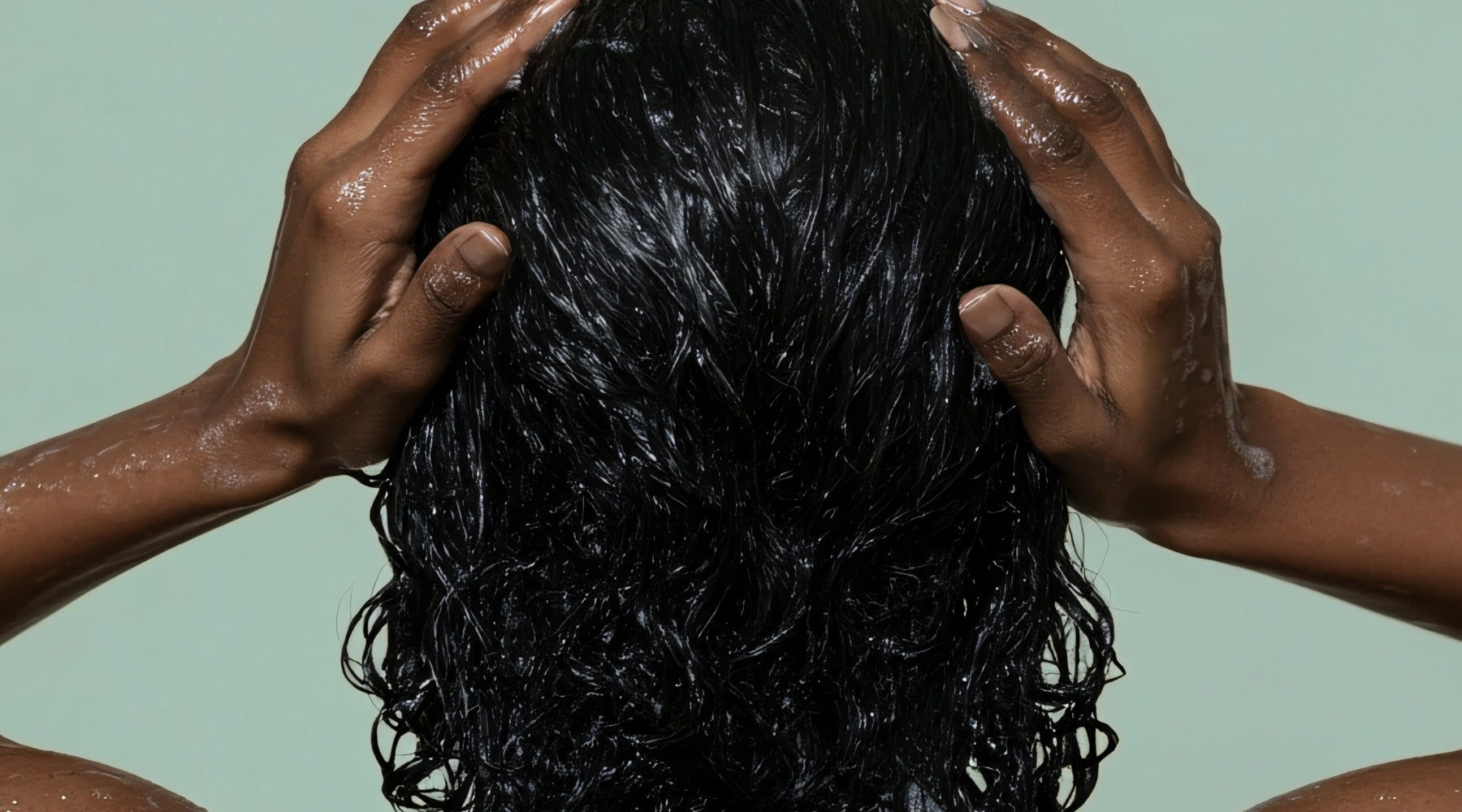
How Often Should You Really Be Washing Your Hair?
If there's one beauty question that refuses to go away, it's this: how often should I really be washing my hair?
Daily cleansing. Weekly resets. Endless TikTok routines that contradict each other. From our perspective at SILKE London, the confusion isn't surprising. Hair washing has become less about scalp health and more about habit - and that's where many people go wrong.
We see hair as an ecosystem. Your scalp, your routine, your lifestyle, and even what your hair rests against at night all play a role. To cut through the noise, we spoke with our co-founder and hairstylist Maria Sotiriou, whose almost four decades behind the chair have shaped our philosophy around hair health, longevity, and why it's always yes to 100% silk hair care.
1. How Often Should You Wash Your Hair?
The short answer: not as often as you think.
“You should aim to wash your hair every five to seven days,” Maria explains. While that may sound radical if you’re used to daily washing, it’s actually how the scalp is designed to function.
Your scalp naturally produces sebum - a nutrient-rich oil that protects the hair, adds shine, and strengthens the fibre. When allowed to travel down the hair shaft, sebum acts as nature’s leave-in conditioner. The problem? Most people never let it get that far.
Why Your Hair Feels Greasy So Quickly
“One of the most common issues I see is a build-up of grease, skin, and environmental dirt,” Maria says. “This leads people to think they need to wash every day, when in reality they’ve never properly broken down the grease in the first place.”
Her analogy is simple - and spot on. Imagine a dish used to roast meat. If it isn’t washed properly, the grease stays stuck. Each day we produce sebum, but if it doesn’t move along the hair shaft, it sits at the roots, attracts dirt, and becomes what we recognise as ‘grease’.
This creates a vicious cycle: greasy roots, frequent washing, stripped lengths, and increasingly dry, brittle ends - without ever truly addressing the build-up itself.

2. Washing Effectively: Where Most People Go Wrong
Washing less only works if you’re washing properly.
Hair that hasn’t been cleansed effectively isn’t just harder to manage - it’s harder to treat professionally. “Hair that isn’t properly washed can’t be cut or styled correctly,” Maria notes. “Colour services are affected too, particularly when covering grey hair.”
In the salon, Maria double-washes every client - and sometimes, even that isn’t enough. Long-term build-up can take time to break down, which is why technique matters as much as frequency.
The Biggest Mistake? Over-Clarifying
“Avoid harsh clarifying shampoos,” Maria advises. “They’re designed to strip everything in one go, which can damage mid-lengths and ends that are already dry from not benefiting from sebum.”
Instead, she recommends a balanced, scalp-friendly formula that cleanses thoroughly without compromising the lengths.
Maria’s Professional Washing Method
- Apply shampoo to targeted areas: front hairline, crown, behind the ears, and nape
- Massage using the pads of your fingers, never your palms
- Pay particular attention to behind and in front of the ears and below the nape
- Gently move the suds through the lengths
- Massage for at least one full minute, rinse thoroughly, then repeat
- Condition all hair and rinse for at least one minute - never rush
“Consistency is everything,” Maria says. “Build-up will break down if you’re patient.”
Choosing Products That Actually Suit Your Hair
Product choice should always reflect hair condition, not trends:
- Damaged hair: Hydrating shampoos with protein, plus masks and leave-ins applied from root to ends
- Colour-treated hair: Sulphate-free formulas with UV protection
- Dry, thick, or curly hair: Hydrating shampoos with natural oils to smooth the cuticle
- Fine or thin hair: Lightweight, volumising cleansers that won’t weigh hair down
- Dry or flaky scalps: Barrier-repair formulas with glycerine and ceramides
You may also need to adjust products seasonally. “If your hair or scalp starts to change, that’s your cue,” Maria explains. Warmer months, in particular, are ideal for introducing pre-wash oils, protein masks, leave-in conditioners, and heat protection to keep the cuticle supple and resilient.

3. Why Silk Matters More Than You Think
Healthy hair isn’t only about how you wash - it’s also about how your hair rests and recovers.
“A SILKE London Hair Bonnet helps distribute sebum from root to ends without the hair looking or feeling greasy,” Maria explains. “The hair just looks healthy, strong, and shiny.”
Unlike cotton, silk doesn’t absorb moisture or roughen the cuticle. It allows sebum to glide naturally along the hair shaft while protecting against dehydration - the root cause of most hair concerns.
Adding a silk hair bonnet into your routine helps your hair comfortably go longer between washes, meaning:
- Less water
- Less heat styling
- Fewer products
- Longer-lasting blow-dries (often four, five, even six days)
“Always protect your hair with silk,” Maria adds. “And avoid dehydration - it’s behind almost all hair problems.”

The Takeaway
Washing your hair less often isn’t about neglect. It’s about intention.
When you cleanse effectively, choose the right products, and protect your hair with silk, you allow your scalp to do exactly what it was designed to do. Healthy hair doesn’t start with more effort - it starts with smarter care.
And sometimes, that means washing less, not more.



Leave a comment
This site is protected by hCaptcha and the hCaptcha Privacy Policy and Terms of Service apply.